
Information requirements from licensing authorities Premises licences
This is a necessary objective to help mitigate against gambling-related harm. We are particularly concerned that Option 1 may encourage new operators to enter the market with the specific intention of maximising their Category B cabinet offer in this way. Therefore, some respondents argued that Option 3 would be the most sensible long-term approach for securing safer gambling functionality and messaging across these venues. However, overall almost half of respondents from the arcade and bingo sector acknowledged that Option 3 posed a risk of increasing gambling-related harm. There was a general consensus across respondents that Option 3 presented the greatest risk of increasing rates of gambling-related harm. In considering gambling-related harm we were attuned to the various perspectives provided by respondents.
Scenario AA customer aged 27 stakes £5 on an online slot game. For customers who are aged 18 to 24, the maximum they can stake per game cycle for online slots is £2. For customers who are aged 25 and older, the maximum they can stake per game cycle for online slots is £5.
Therefore, the government’s position is to consult on what principles and player protections should be put in place to support any relaxation of the rules around playing gaming machines with a debit card. Permitting cashless in a targeted way, for example allowing debit cards to be used to pay for particular types of gaming machines or machines in certain types of venues, would not provide clarity on the principles and player protections required within a cashless framework. Over this same period, the weighted average weekly income from gaming machines for Landlord & Tenant pubs fell from around £215 to approximately £190, whilst for Managed pubs this fell from around £230 to approximately £180. Between 2019 and 2021, there was a decrease in the percentage of Landlord & Tenant pubs with gaming machines (from 60% to just over 40%), as well as a decrease in the percentage of Managed pubs with gaming machines (from 80% to around 65%).
Premises licences are the third main category of licence (operating and personal licences being the other two) that will be issued under the Act. This includes betting shops, casinos, bingo premises and arcades. Separately, the Gambling Commission confirmed in our online games design response in 2021 and our remote gambling and software technical standards (RTS) that for remote slots it must be a minimum of 2.5 seconds from the time a game is started until the next game cycle can be commenced (RTS 14D). (3) Where this condition is attached to a remote casino operating licence which was issued before this regulation comes into force, the condition has effect from the date on which this regulation comes into force. Withdrawing from online casinos using PayPal and other e-wallets tend to be the fastest option, taking just a few hours. These reviews cover how to use each method and list the top online casinos for each option.
Data links
Well-trained staff enhance player safety and align with casino staff regulations UK. From dealers to security personnel, employees must be trained and treated fairly, with compliance extending to workplace regulations and gambling-specific requirements. Non-compliant operators risk fines, reputational damage, or license revocation, underscoring the need for casino compliance. This involves checking government-issued IDs, utility bills, or bank statements, aligning with casino licensing requirements UK. KYC processes require casinos to verify a player’s identity, address, and age before allowing deposits or withdrawals.
Options/Help
Anecdotal industry evidence suggests that payment methods are a factor in this decline in machine usage, as pub goers now pay for food and drink by card but might have previously played a machine using spare change. While the existing framework has allowed for some innovation in cashless payments, gambling has largely remained cash-based. In addition to this, research commissioned by Bacta showed that in 2018, seaside arcades alone contributed £451m in UK GVA, and were responsible for employing around 19,000 people. Cash-only gambling was assumed to give players more control by providing natural interruptions in play to obtain more cash, helping players play within budget limits.

“(1) This paragraph applies to all premises in respect of which a converted casino premises licence has effect.”; “larger converted casino premises” means premises in respect of which a converted casino premises licence has effect, and which— The Act requires the holders of operating licences to pay an annual fee for their licence, in advance. For operating and personal licences relevant details of the licence will be published in the public register8.
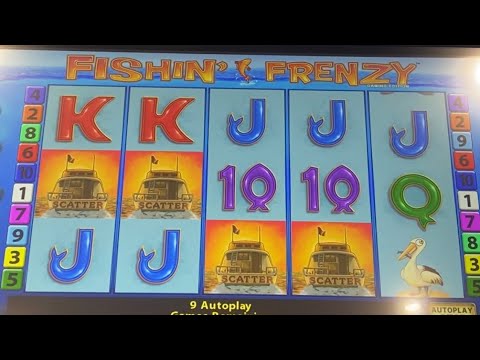
It has also meant that none of these casinos are able in practice to satisfy the current conditions which would allow them to offer the maximum number of gaming machines due to the amount of space they take up. Please provide any views or any other information on the adequacy of player protections for those using gaming machines in casinos. How do you expect the measures allowing more gaming machines in 1968 Act casinos to impact the provision of other product offerings within casinos e.g. table gaming? How do you expect the measures allowing more gaming machines in 1968 Act casinos that meet certain size requirements to affect the demand for gaming machines in casinos?
It is recommended that applicants make clear what changes are to be made to the layout and content of the gambling offer. If those changes are made in the future, then operators would be able to access these provisions after they come into effect. A licensed casino operator in Scotland wishes to take advantage of the new entitlements. Regulation 3 of the Gambling Act 2005 (Mandatory and Default Conditions) (England and Wales) Regulations 2007 (opens in new tab) requires the layout of the premises to be maintained in accordance with the plan. A range of gambling activities are already authorised by the Act, by existing Regulations and some are further added by the new Regulations which came into force on 22 July 2025.

If a gambling company fails to comply with the regulations, it can face substantial fines from the Gambling Commission. Applicants are eligible to apply for the premises license only after applying or receiving an operating license. Ancillary licenses apply to operators that provide telephone and email betting.
Category C machines, which have a maximum stake of £1 and a maximum prize of £100, can only be played by adults in certain venues, such as pubs, betting shops, arcades and bingo halls. Firstly, it would split family groups, requiring adults who wish to play these machines to leave the group playing on non-gambling products. Industry responses highlighted that it is disproportionate to require that these machines be moved to an age-restricted area for 2 key reasons. For example, Bacta commented that ‘cash-out’ Category D slot-style machines are substantially different from harder gambling slot machines, and are better described as fruit machines or amusement with prizes machines.
There have been substantial changes to how consumers make payments in society since the ban on direct debit card use on gaming machines. Measures that we are seeking views on are intended to address inconsistencies between the different types of casino licence, as well as levelling the playing field to an extent between land-based and online operators. The UKGC issues licenses for both physical (non-remote) and online (remote) casinos, each tailored to specific operations.
An “economic crime levy” is payable by entities that are regulated for anti-money laundering purposes (currently only casinos in the UK) and which generate more than £10.2 million in UK revenue. It should be noted that in April 2025 HM Treasury opened a consultation (which closed on 21 July 2025) on a proposal to introduce a single remote gambling duty that would apply to all remote gambling activities targeting the UK. 15% of the commission charges charged by betting exchanges to users who are UK citizens Operating licences are generally indefinite, subject to paying annual fees.
Those licensees who want to utilise the new entitlements will have to apply to the relevant licensing authority to vary the premises licence, so the premises layout plan reflects changes in operation. Conditions may, in particular, limit the number of machines that may be provided in a casino and the number of player positions that may be provided for use of the machines. Such equipment, which neither involves nor is linked to a game requiring human operation, is not a gaming machine provided it is used in accordance with Commission licence conditions set under this subsection (section 235(2)(i)). 450.In relation to casino entitlements, the Secretary of State can make regulations defining “gaming table”, and, in particular may specify when a gaming table is to be treated as being used in a casino. 445.In addition, licensing authorities have power to set individual conditions for a premises licence when they grant it.
The objective of providing customers with a genuine choice of higher and lower stake machines is understood in terms of providing a safeguard against increased gambling harm. Gaming machines account for a significant proportion of energy costs, a substantial number of which are sited by operators purely to meet the 80/20 rule. The Gambling Commission raised concerns that arcade and bingo venues have sought to maximise their number of Category B machines under the current rules by providing Category C and D gaming on tablets and in-fill machines. As outlined in the white paper, we strongly encourage operators to continue to improve player safety controls on Category B3 machines. Premises licence fees are collected by licensing authorities for applications and annual renewals to cover the cost of administration of their gambling duties and gambling enforcement. Currently, annual fees for 1968 Act casinos are between 65% and 90% of the annual fees that 2005 Act casinos in the equivalent fee category are required to pay.
The primary cost of this measure is the additional costs incurred by gambling operators resulting from the increased licensing fees. The primary and intended benefit of this measure is to increase funding for licensing authorities to carry out administrative and enforcement duties in relation to land-based gambling premises in their remit. Scottish Ministers also have power to set application and annual fees for premises licences, which differ from the fees set out for England and Wales, and are set out in the Gambling (Premises Licence Fees) (Scotland) Regulations 2007. This activity may include inspecting gambling premises to ensure that they are complying with their licence or dealing with complaints from residents or neighbours.
Licensing authorities have an important regulatory role alongside the Gambling Commission in licensing local premises. Please upload any further evidence or any other information that should be considered as part of this consultation relating to an age limit on ‘cash-out’ Category D slot-style machines. Should it be a criminal offence for a person to invite, cause or permit children or young persons to play on these machines? What measures, if any, do you think venues should adopt to ensure that no under-18s play on ‘cash-out’ Category D slot-style machines if the age limit is introduced? Should ‘cash-out’ Category D slot-style machines be required to move to age-restricted areas in venues? Should the government introduce an age limit on ‘cash-out’ Category D slot-style machines to 18 and over?
- One betting shop operator was concerned that allowing direct debit card payments would minimise the interactions a customer has with betting shop staff as their current customer journey requires a certain level of interaction with a staff member.
- Twenty-two per cent of respondents stated that these machines should not be placed in age-restricted areas.
- The flat additional application fee payable for a licence that combines all three of these activities is £2,512.
- The persons considered relevant may vary depending on the information provided in the operating licence application and on company structure, but are likely to exercise a function in connection with, or to have an interest in, the licensed activities.
- A ‘mixed session’ is a single session that takes place on games of different machine categories.
- A licensed casino operator in Scotland wishes to take advantage of the new entitlements.
This involves an assessment of an applicant’s ability to comply with regulatory responsibilities, uphold the licensing objectives and work co-operatively with the Commission. This involves an assessment of an applicant’s willingness to comply with regulatory responsibilities, uphold the licensing objectives and work co-operatively with the Commission. With existing businesses the Commission will consider the resources devoted to the gambling operation and the degree to which they could deliver the necessary arrangements for the provision to be compliant with the Act. The Commission will also want to ensure that it can establish who benefits from the gambling provided and therefore require that any shareholders with a 3 percent holding are listed and that those with over 10 percent holding complete an Annex A form to enable further checks to be carried out on them.
By contrast, licensing authorities and respondents from the third sector tended to highlight the risk of increased gambling-related harm as a result of increasing commercial flexibility for businesses. In general, responses received from gambling industry respondents typically argued for the most liberalised position across the range of measures outlined in the consultation. We received 87 responses non gamstop casinos to the land-based gambling consultation.

Some respondents stated that any transaction time should at least ensure a break from the machine that is equivalent to the time it takes to access additional funds from an ATM. Our aim throughout the development of this policy has been to replicate the experience of playing on a machine with cash and the deposit and committed payment limits play an important role in the current customer journey. The government will ensure that these regulations will apply to direct debit card payments when amending the secondary legislation.
If you’re looking for commendable UK casinos with fast withdrawals, go for WinWindsor Casino, Dream Vegas, or MagoBet Casino. The subsections below offer insight on how to choose the right online casino for you. Rare as they may be, you’ll find popular no-deposit UK casinos like Spin Genie Casino on this page.
Breaks in play are designed to stop dissociation/disconnection from the world around them, with research suggesting that best practice is to combine breaks in play with responsible gambling messaging. (Optional response) Sliding scale If No is selected What do you think the maximum committed payment limit should be for the following machine categories (£)? Shown if No is selected What do you think the maximum deposit limit should be for the following machine categories (£)? (Optional response)Sliding scale